Why Most Students Fail Chemical Kinetics (And It’s Not Because It’s Hard)
Every year, when I start teaching Chemical Kinetics, I see the same reaction from students.
Panic. Some students decide immediately: “This chapter is difficult.”
What is interesting is this: many of the same students later tell me it became one of their favourite lessons.
So what changed? It wasn’t the chapter. It was their approach.
If you feel scared of chemical kinetics A/L, this article will completely change how you see this lesson.
Table of Contents
-
Why students fear Chemical Kinetics
-
The real reasons students fail
-
The biggest mistakes I see in class
-
The correct way to study kinetics
-
How to practise for exams
-
Final advice
Why Students Fear Chemical Kinetics
Chemical Kinetics is the first chapter where students feel Chemistry becoming “mathematical”.
You suddenly see:
-
Graphs
-
Logarithms
-
Rate equations
-
Mechanisms
Many students think, “This feels like Physics.”
But here is what I always tell my class:
Chemical Kinetics is actually one of the most predictable chapters in the syllabus.
Questions repeat.
Patterns repeat.
Concepts repeat.
Once you understand the logic, the fear disappears.
The Real Reasons Students Fail
After teaching this chapter for over 20 years, I realised something surprising.
Students don’t fail because kinetics is hard. They fail because they study it the wrong way. Let me explain the real reasons.
Reason 1: Weak foundation in basic concepts
Students jump into calculations too early.
But before calculations, you must understand:
-
What is the reaction rate?
-
Why do reactions have different speeds
-
What collision theory means
Without this foundation, formulas feel random.
Reason 2: Memorising formulas without understanding
I see this every year. Students memorise:
Rate = k[A]^m[B]^n
But they don’t understand:
-
What order means
-
Why order ≠ coefficient
-
How experiments determine rate laws
So when the examiner twists the question, they panic.
Reason 3: Not practising graphs
Kinetics loves graphs. If you avoid graphs, you are avoiding marks.
Common graph fears:
-
Rate vs concentration
-
First order vs second order plots
-
Half-life graphs
The good news?
These questions are extremely predictable once you practise them.
The Biggest Mistakes I See in Students
Mistake 1: Skipping the “why”
Students rush to solve numerical questions. But kinetics is a logical chapter.
If you understand the story behind the reaction, calculations become easy.
Mistake 2: Avoiding mechanism questions
Mechanisms look scary. But examiners ask very similar mechanism questions again and again.
Avoiding them guarantees lost marks.
Mistake 3: Waiting until revision to practise
Kinetics is skill-based.
Skill improves with early practice, not last-minute revision.
The Correct Way to Study Chemical Kinetics
This is the exact method I tell my students to follow.
Step 1: Build conceptual clarity first
Before touching calculations, understand:
- Reaction rate and graphs
-
Collision theory
-
Factors affecting the rate
-
Energy profile diagrams
If the theory is strong, everything else becomes easier.
Step 2: Learn the “question patterns”
Kinetics questions usually fall into clear categories:
-
Determining reaction order
-
Graph interpretation
-
Half-life calculations
-
Mechanism explanations
Once you see the patterns, confidence grows fast.
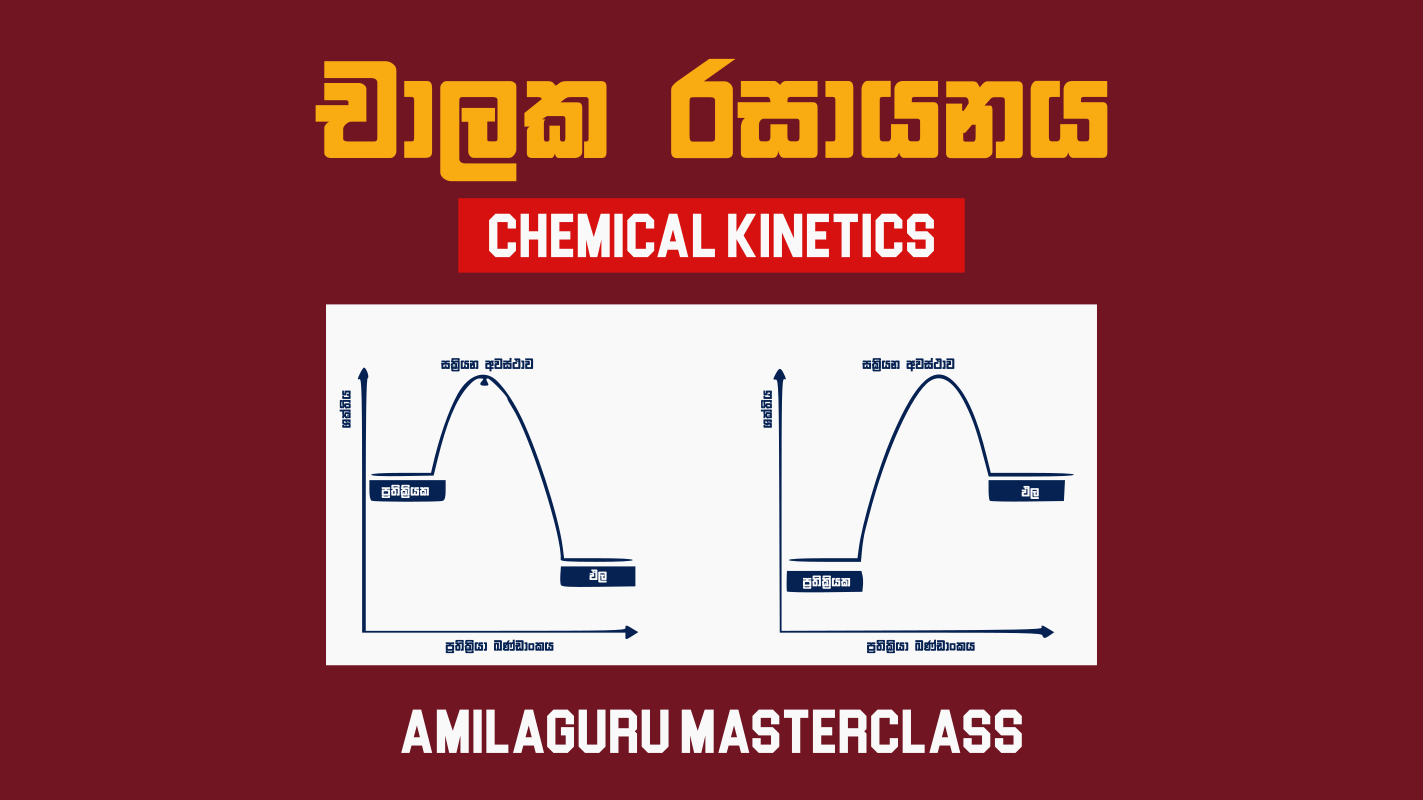
This is one reason I created a dedicated Chemical Kinetics Masterclass to guide students through these patterns step-by-step instead of leaving them to figure it out alone.

Step 3: Practise topic-wise past paper questions
After learning each subtopic, solve related past paper questions.
This builds exam thinking early.
Step 4: Keep a mistake notebook
Write down:
-
Confusing question types
-
Calculation errors
-
Concepts you mix up
Before exams, this notebook becomes gold.
How to Practise for Exams
Kinetics rewards students who practise smart.
Focus on:
-
Graph interpretation speed
-
Recognising question types
-
Writing clear explanations
Many students are surprised by how often similar kinetics questions appear in past papers.
This is why guided practice makes a huge difference.
Final Advice
Let me be honest.
Chemical Kinetics is not the hardest chapter.
It only feels difficult at the beginning.
Once the concepts click, it becomes one of the most scoring chapters in A/L Chemistry.
If you are struggling now, it doesn’t mean you are weak.
It simply means you haven’t been shown the right method yet.
Key Takeaways
-
Kinetics is predictable and repeatable
-
Understanding matters more than memorising
-
Graph practice is essential
-
Past paper practice should start early
-
Correct guidance makes the chapter easier
FAQ
Is Chemical Kinetics a difficult chapter?
It feels difficult initially, but it becomes easier with proper practice.
Do kinetics questions repeat in exams?
Yes, question patterns repeat frequently.
Should I memorise formulas?
Understand first, then memorise.
How many past paper questions should I practise?
As many as possible, especially graph questions.
Want Step-by-Step Guidance?
If you want structured lessons, guided past paper discussions, and a clear study system, my Chemical Kinetics Masterclass is designed specifically for A/L students.
Instead of struggling alone, you can follow a clear path and build confidence step by step.
Start learning the right way.