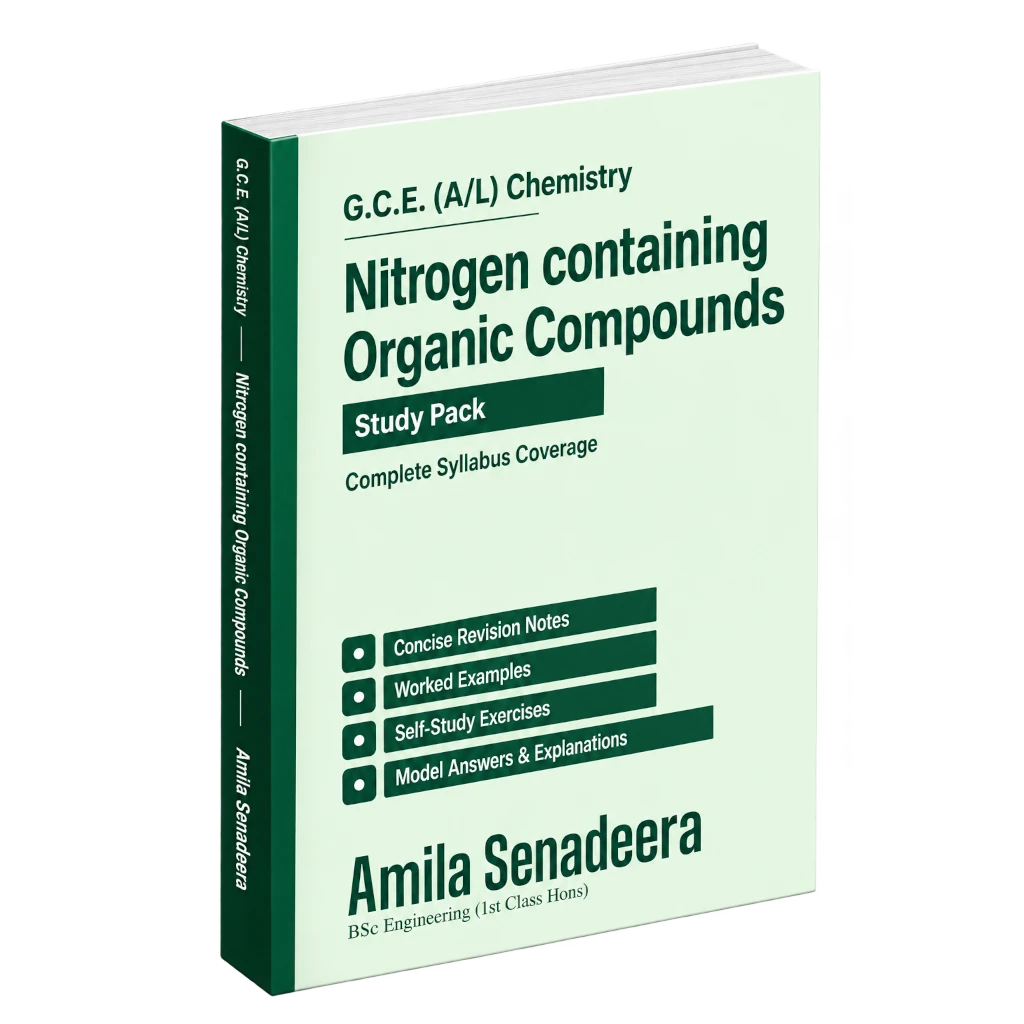
Nitrogen Containing Organic Compounds | A/L Chemistry | Organic Chemistry Self-Study Pack – 4
රු1,850.00
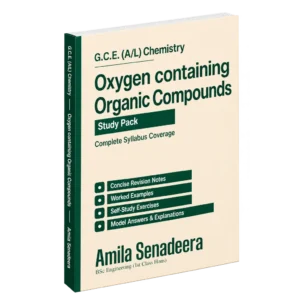
A step-by-step self-study pack for the Nitrogen-Containing Organic Compounds unit of G.C.E. (A/L) Chemistry: amines, aniline, basicity, and diazonium salts.
Every lesson has worked examples, common traps, examiner’s eye notes, and Try It questions with full answers.
Volume 4 of the Organic Chemistry Quartet. English medium.
✔ Islandwide Delivery
✔ Trusted by A/L Chemistry Students
✔ Secure Checkout
Description
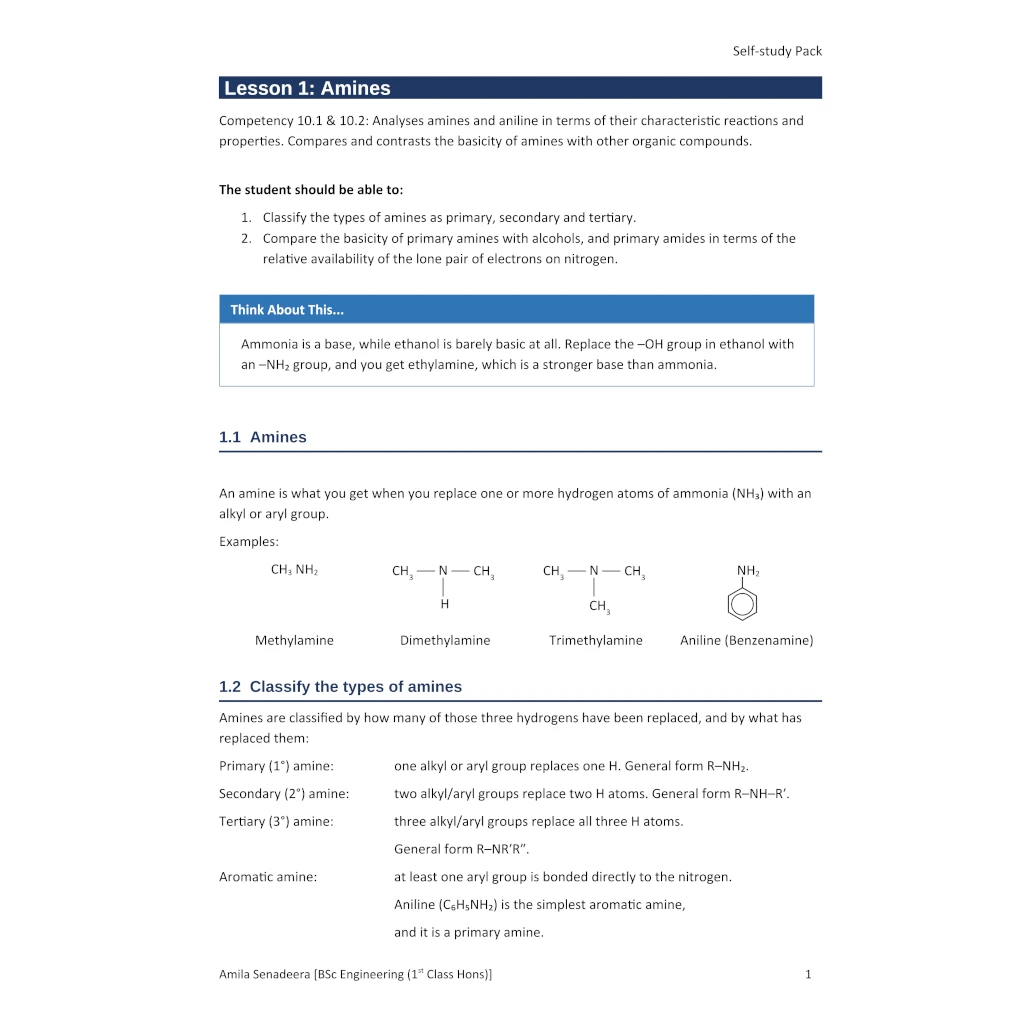
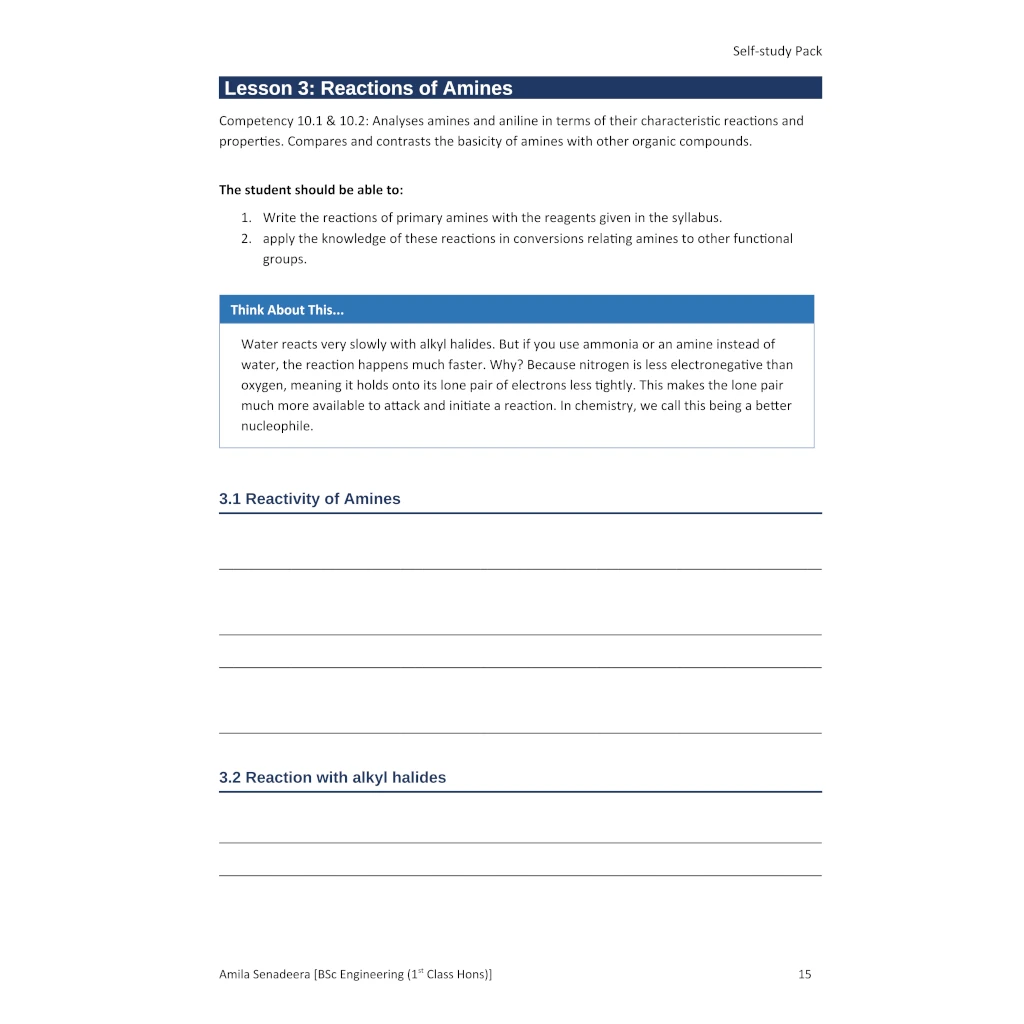
- Classifying amines as primary, secondary, and tertiary (and how it differs from alcohols/halogenoalkanes).
- Basicity of amines compared with alcohols and amides, explained through electronegativity and resonance.
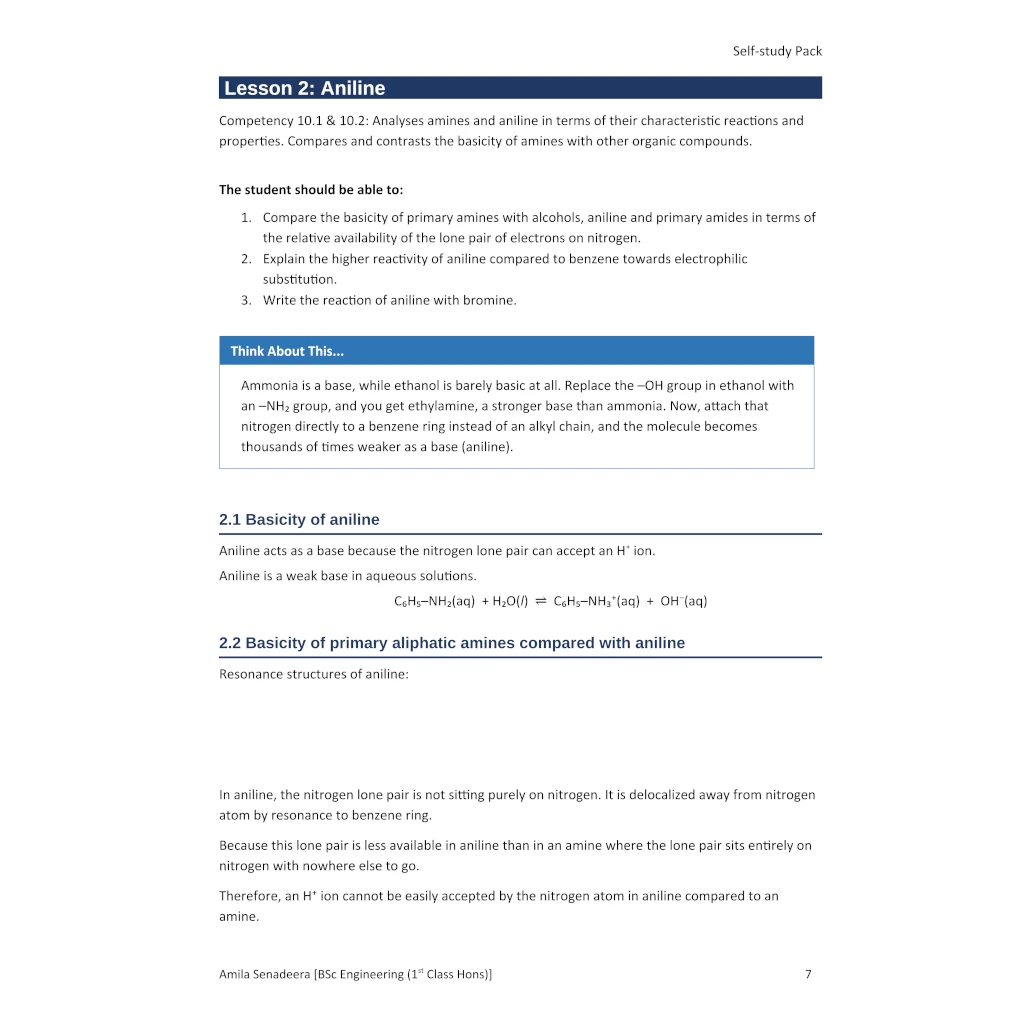
- Basicity of aniline compared with aliphatic amines.
- Why aniline is more reactive than benzene, and the bromine water test (2,4,6-tribromoaniline).
- Protecting aniline by acetylation: protect, react, deprotect (an extension built for synthesis questions).
- The four characteristic reactions: with alkyl halides, aldehydes and ketones, acid chlorides, and nitrous acid.
- Using nitrous acid to chemically distinguish aliphatic from aromatic primary amines.
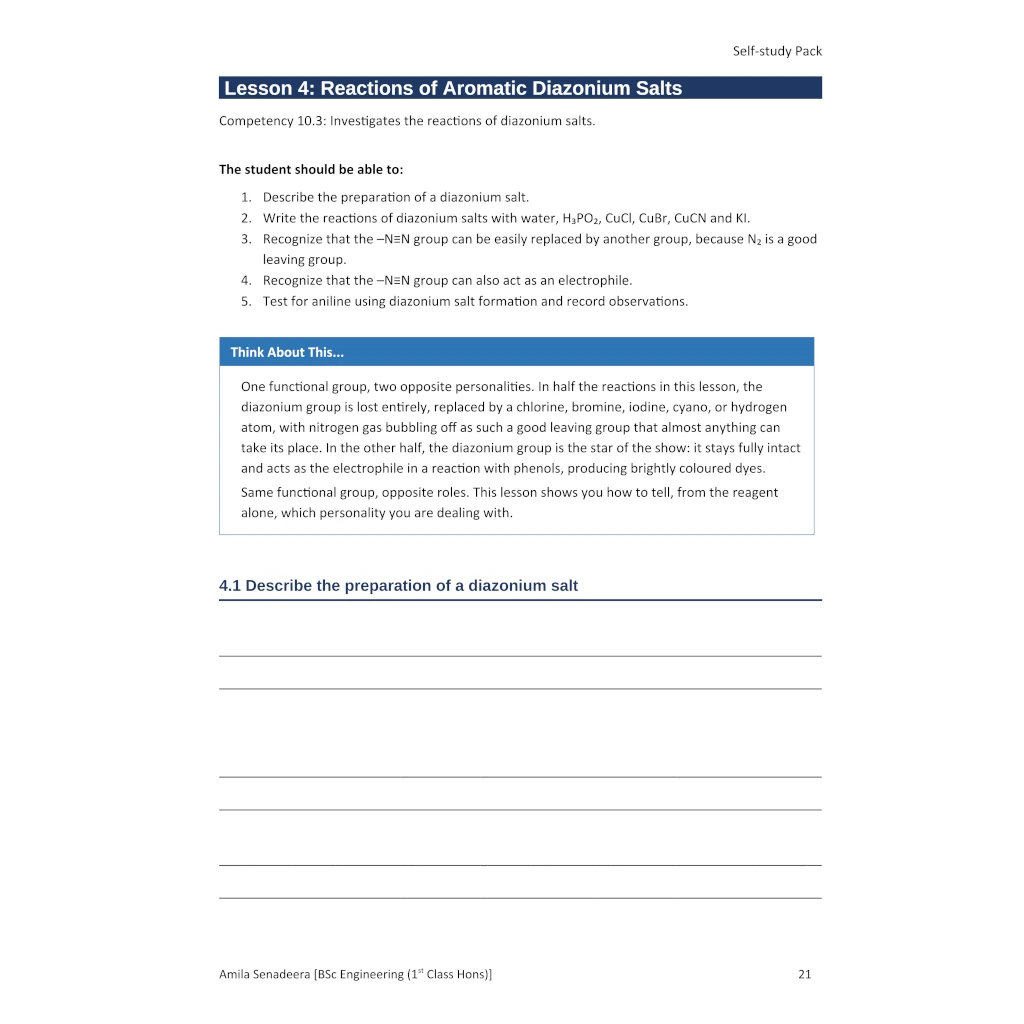
- Preparing a diazonium salt, with the exact conditions the mark scheme expects.
- Replacement reactions with water, H₃PO₂, CuCl, CuBr, CuCN, and KI, and why N₂ is such a good leaving group.
- Coupling with phenol and 2-naphthol, and the colours you must recall.
- The diazonium test for aniline, with the exact observations to record.
- A companion notebook, free with your purchase.
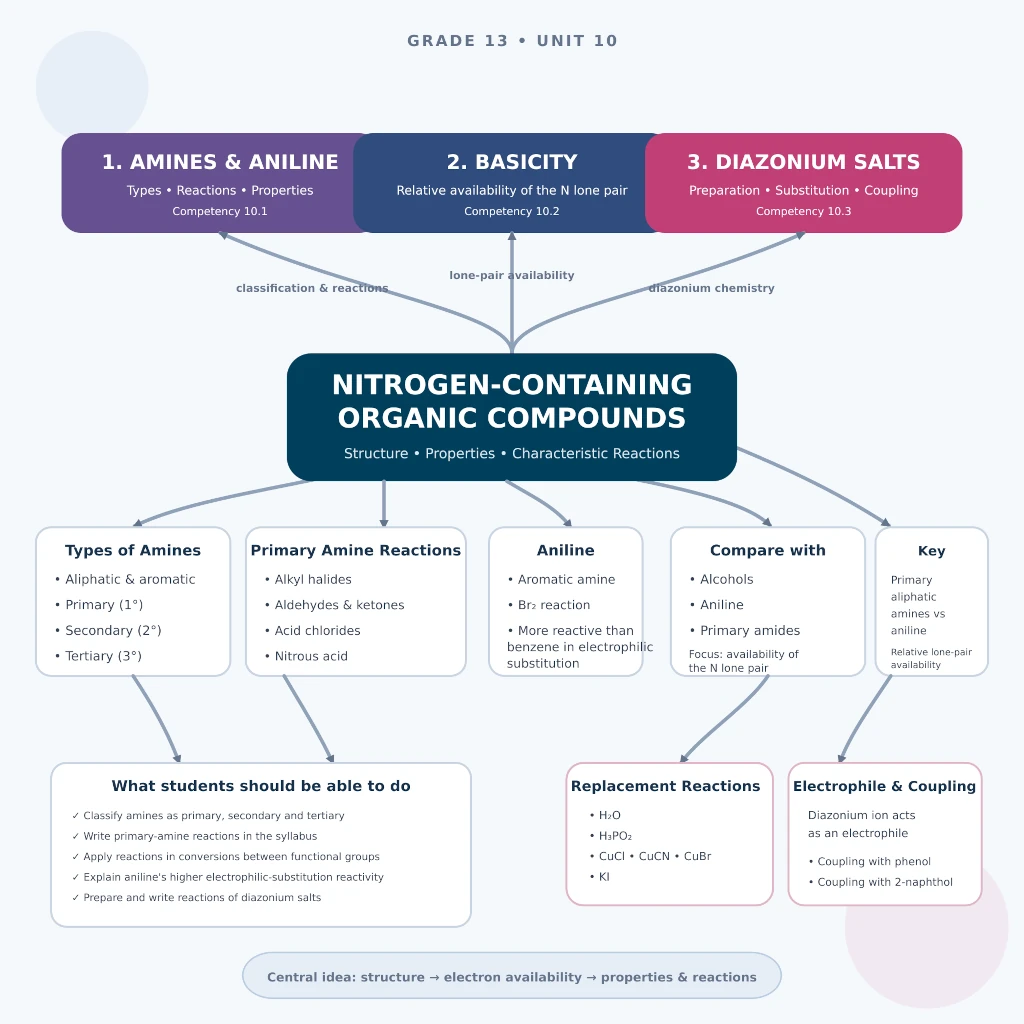
- A visual concept map of the whole unit.
- A punchy unit overview and syllabus coverage table.
- Quick-reference reaction summaries.
- A Quick-Review Checklist to track your progress.
- A Think About This hook to start the lesson and build intuition.
- Key Points that pull out the core rule or definition.
- Worked Examples that show the reasoning step by step, with mark allocations.
- Common Traps: what students often get wrong, and why.
- Examiner’s Eye: what the mark scheme actually looks for.
- Try It questions with full model answers to test your understanding before you look at the solution.
- Tell ethylamine from aniline with one simple test.
- Explain, using resonance, why propan-1-amine is a stronger base than aniline.
- Plan a three-step route from aniline to 4-nitroaniline and explain why direct nitration fails.
- Convert aniline into phenol, bromobenzene, benzonitrile, or iodobenzene.
- State exactly what you observe when a diazonium salt couples with alkaline 2-naphthol.
Format and access
App access, delivered after purchase.
Android app 👉 [Google Play Store]
Windows app 👉 [Download the App]
Linux AppImage 👉 [Download the AppImage]
FAQs
Does it cover the whole unit?
Yes, all three competencies: amines and aniline, basicity, and diazonium salts.
Do I need the earlier volumes?
This pack builds on benzene’s electrophilic substitution and on acid chloride and amide chemistry, so it works best after those topics. You can also use it on its own for revision.
Basic Concepts of Organic Chemistry | Organic Chemistry Self-Study Pack – 1 👉 Start Learning!
Hydrocarbons and Halohydrocarbons | Organic Chemistry Self-Study Pack – 2 👉 Start Learning!
Oxygen-Containing Organic Compounds | Organic Chemistry Self-Study Pack – 3 👉 Start Learning!
Nitrogen-Containing Organic Compounds | Organic Chemistry Self-Study Pack – 4 👉 Start Learning!
Does it replace my class?
Yes, for learning the concepts. The pack covers every concept in the unit step by step, with worked examples and Try It questions with answers, so you can learn the whole topic from it without attending a class.
Is there a companion notebook?
Yes. When you purchase this pack, the companion notebook is included free. It is where you write your own notes, reaction summaries, and Try It answers as you work through the lessons. You receive it free after purchasing the study pack.
How can I practice Past Paper Questions?
Use the AMILAGuru Past Paper Discussion (PPD) pack for Organic Chemistry. It takes real A/L past paper questions and discusses them step by step, so you can see how each one is answered and where the marks are earned. Learn the concepts from this pack first, then move to the PPD to apply them.
How can I practice more?
Use the AMILAGuru Organic Chemistry Workbook. It has 50 questions with detailed answer keys, so you can keep practising after you finish the pack.
Organic Chemistry Workbook + 50 Comprehensive Questions, Model Answers & Explanations 👉 Grab your Copy


Reviews
There are no reviews yet.